stay firesafe

Understanding California’s AB 38
Wildfire Safety Requirements
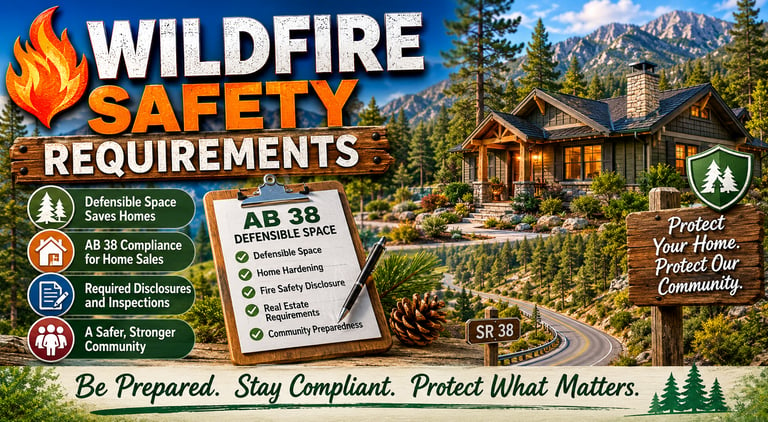
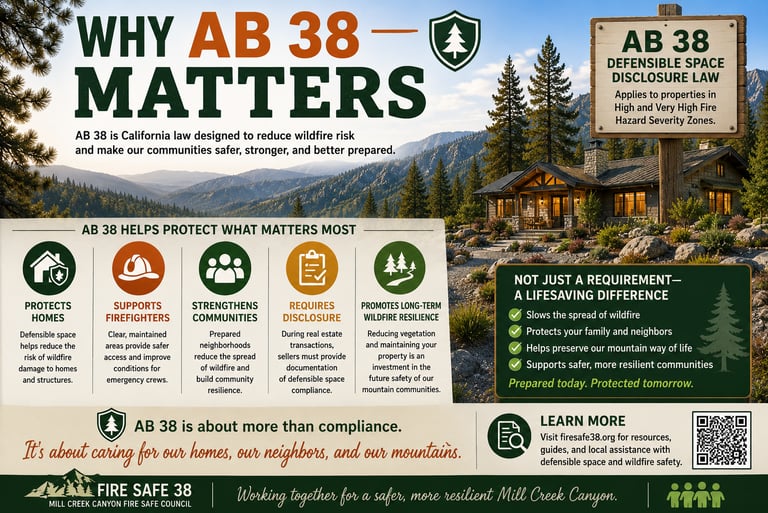
As wildfire risks continue to grow across California’s mountain communities, state law now requires additional wildfire safety disclosures during many real estate transactions in designated fire hazard areas.
Known as AB 38, this law helps ensure that homes located in High and Very High Fire Hazard Severity Zones meet California’s defensible space requirements before a property is sold.
For homeowners in communities along the Highway 38 corridor, including Forest Falls, Mountain Home Village, Angelus Oaks, and surrounding mountain areas, this means wildfire preparedness is no longer just recommended, it is increasingly becoming part of the home buying and selling process.
What Is Defensible Space?
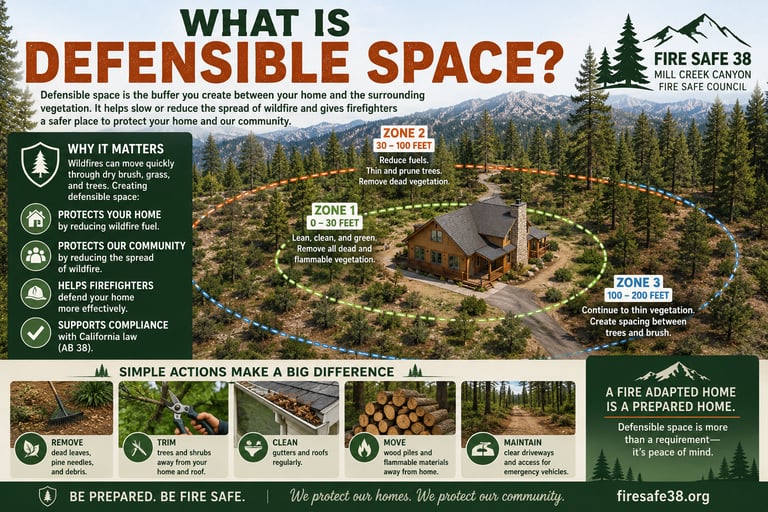
Defensible space refers to the buffer created between a structure and the surrounding vegetation, designed to help slow or reduce the spread of wildfire.
This may include:
• Removing dead vegetation and debris
• Trimming trees and overgrown brush
• Maintaining proper clearance around structures
• Reducing combustible materials near homes
• Improving access for emergency responders
Why AB 38 Matters
The purpose of AB 38 is not simply compliance. It is about improving wildfire resilience, protecting homes, supporting firefighter safety, and strengthening community preparedness.
In many cases, real estate transactions now require documentation or inspections confirming that defensible space requirements have been addressed.
FireSafe38.org Community Support
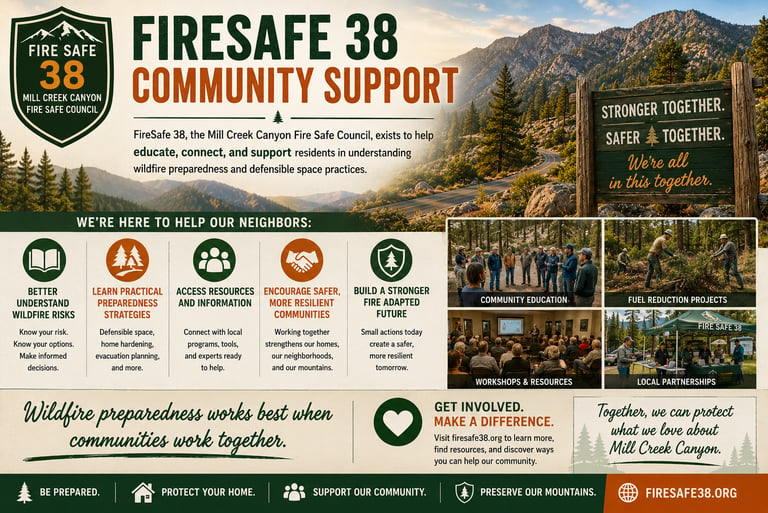
FireSafe38.org, the Mill Creek Canyon Fire Safe Council, exists to help educate, connect, and support residents in understanding wildfire preparedness and defensible space practices.
Our goal is to help neighbors:
• Better understand wildfire risks
• Learn practical preparedness strategies
• Access available resources and information
• Encourage safer, more resilient mountain communities
Wildfire preparedness works best when communities work together.
Address
Mill Creek Canyon fire Safe Council
FireSafe38.org
PO Box 737
Forest Falls, CA 92339
© 2024-2026 Mill Creek Canyon Fire Safe Council, DBA FireSafe38.org • Serving Forest Falls & Mountain Home Village